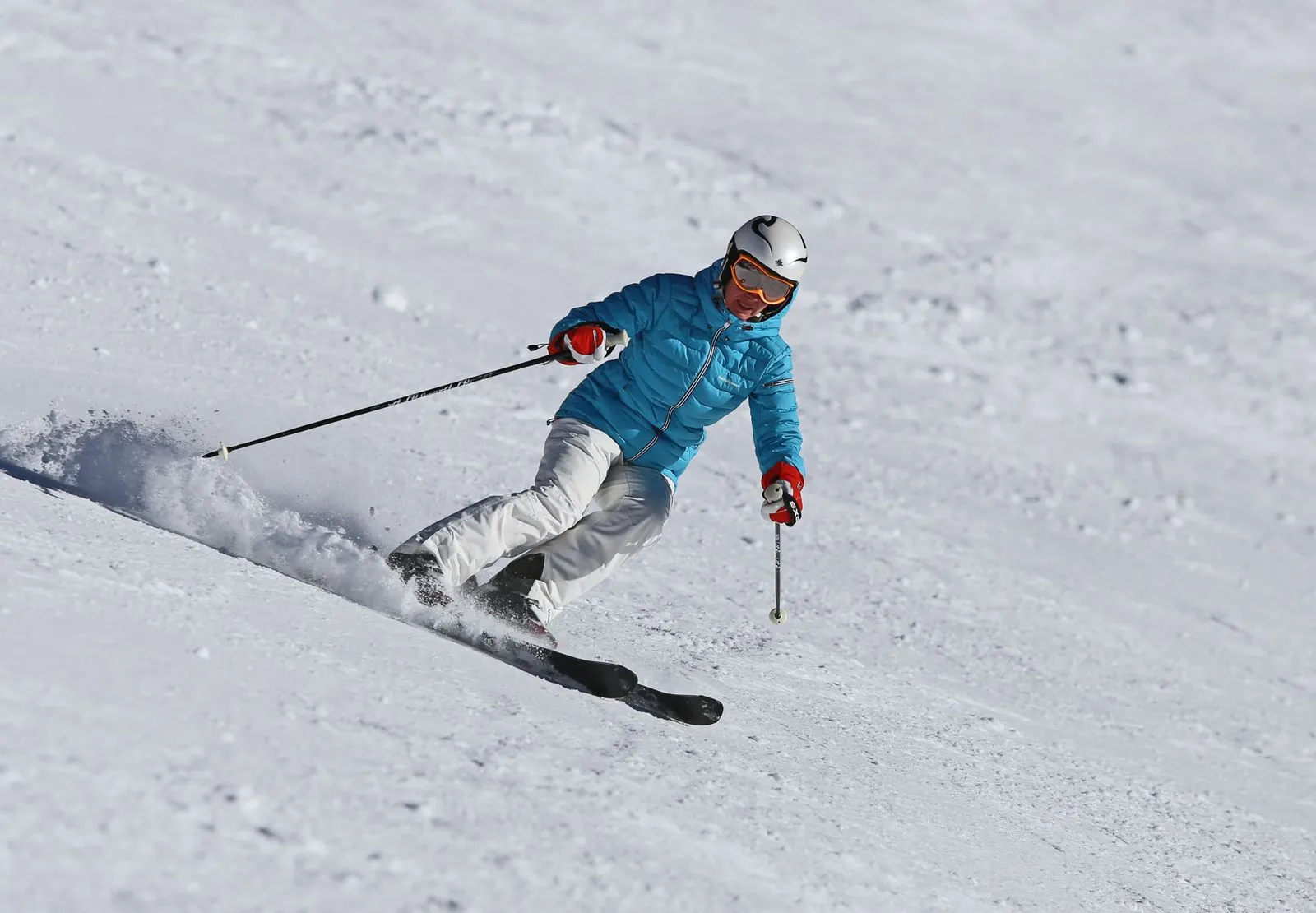
Comfortable turns start with skis that respond predictably without demanding more strength than you want to use. For older adults, the right length, shape, and stiffness can make it easier to guide a ski, manage speed, and stay balanced through a turn. Age alone does not determine which ski is right: your height, weight, ability, preferred terrain, and physical comfort all matter. Use these guidelines to narrow your options, then ask a qualified ski shop or instructor to help confirm the fit.
Choose a Manageable Length
Shorter skis are generally easier to pivot and guide into a turn, which can be helpful at slower speeds or on groomed runs. Longer skis can feel steadier when moving faster and may offer more support in varied snow, but they can take more effort to maneuver. Neither option is automatically better; consider the conditions and speeds where you feel most comfortable.
Use a shop’s sizing recommendation as a starting point, not a final answer. Ski length depends on more than height: weight, ability, ski design, and the terrain you use all affect how a ski performs. If you are returning to skiing or prefer gentle runs, ask to compare a few lengths on snow. Choose a ski you can guide confidently rather than one that simply matches a chart.
Look at Shape and Turn Radius
A ski’s sidecut—the inward curve along its edges—helps determine how readily it follows a turn when tipped on edge. Skis with a more pronounced sidecut often make shorter, quicker turns easier on groomed snow. A ski with a longer turn radius tends to favor broader arcs. Think about the turns you naturally make and the amount of space you like around you.
The ski’s width also affects how it feels. Narrower skis often roll from edge to edge more easily on firm, groomed runs. Wider skis can provide more flotation in soft snow, though they may feel slower to move from one edge to the other. For many recreational skiers who spend most of their time on groomed terrain, a responsive, moderate-width ski can be a practical place to start.
Match Stiffness to Your Effort
A ski that bends easily can respond to lighter pressure and may feel forgiving at modest speeds. A stiffer ski can feel more supportive when pushed harder, but may require stronger input to bend and guide. If a ski feels demanding or tiring during a gentle turn, its stiffness, length, or setup may not match your preferred pace and conditions.
Ask about a ski’s flex and how it performs at the speeds you actually ski. Comfort does not mean choosing the softest ski available: you still need enough support to feel stable and in control. A knowledgeable fitter can help balance responsiveness with steadiness, especially if you have joint discomfort, reduced strength, or a preference for relaxed, gradual turns.
Check the Whole Setup
A well-chosen ski can still feel uncomfortable if the boots do not fit securely. Your heel should stay in place, and your toes should not feel painfully cramped. Boots that are too loose can make it harder to transfer movements to the skis; boots that pinch can distract you and limit time on the hill. Try them on while standing in a skiing stance, and tell the boot fitter where you feel pressure.
Have a qualified technician set and check your bindings for your equipment and personal information. Do not adjust them by guesswork. Before committing to a purchase, ask whether you can demo the skis on familiar terrain. Notice whether they start turns without excessive effort, hold an edge at your usual speed, and leave you feeling balanced rather than worn out.
For comfortable turns, prioritize skis that suit your pace, terrain, and strength—not a particular age-based formula. Compare lengths and shapes, pay attention to stiffness, and make sure your boots and bindings are properly fitted. A local instructor or ski shop can help you assess options and arrange a demo so you can choose with confidence.